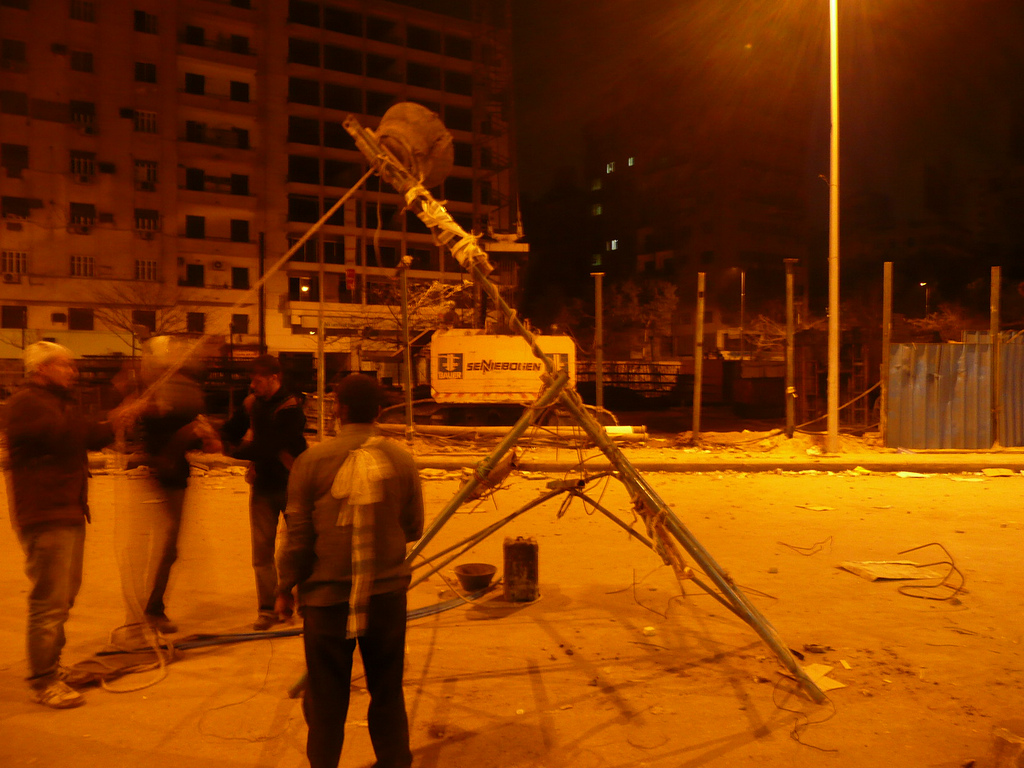
The catapult seems to be en vogue these days. Following the drug catapult confiscated at the US-Mexican border ten days ago, here is a device used by the anti-government protesters at the Tahrir square in Egypt. Source: Al Jazeera. Via Liz McLellan.
Technology for Luddites
The catapult seems to be en vogue these days. Following the drug catapult confiscated at the US-Mexican border ten days ago, here is a device used by the anti-government protesters at the Tahrir square in Egypt. Source: Al Jazeera. Via Liz McLellan.
“Drug smugglers trying to get marijuana across the Arizona-Mexico border apparently are trying a new approach – a catapult. National Guard troops operating a remote video surveillance system at the Naco Border Patrol Station say they observed several people preparing a catapult and launching packages over the International Border fence last Friday evening.” Read & watch.
“The paradox of military technology states that while increased complexity in a military force results in increased capability, it also increases the likelihood that the capability will be unavailable for use because of the collapse of the complex supply chain required to maintain the capability. The implication is that complex military technologies might not be the best acquisition strategy for defence forces in the future.”
“Lasers or longbows? A paradox of military technology“, The Australian Defence Force Journal (PDF 6.4 MB, from page 44). Via “The abandonment of technology“, The Oil Drum.
The embrace of a low-tech approach by Taliban-trained bombmakers – they are building improvised explosive devices out of fertilizer and diesel fuel – has stymied a $17 billion U.S. counteroffensive against the devices in Iraq and Afghanistan, military officials say. Electronic scanners or jammers, which were commonly deployed in Iraq, can detect only bombs with metal parts or circuitry. Read.
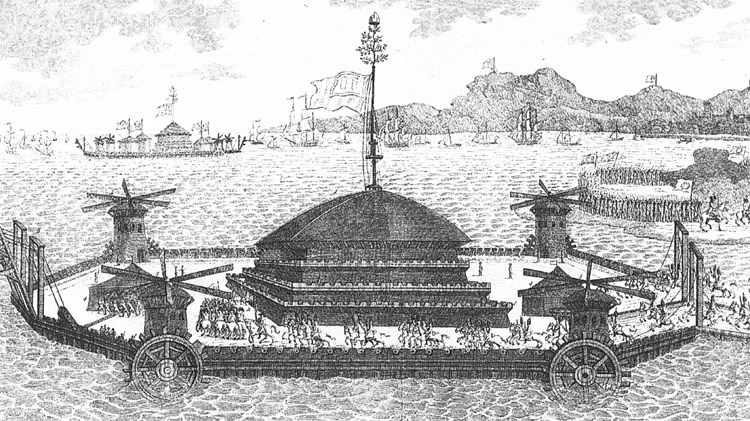
This engraving, published in 1798, shows the gigantic St. Malo raft, designed in 1791 during the French Revolution. The engraving informs us that this extraordinary structure was 600 feet long by 300 broad, mounts 500 pieces of cannon, 36 and 48-pounders, and is to convey 15,000 troops for the invasion of England. In the midst is a bomb-proof, metal-sheathed citadel.
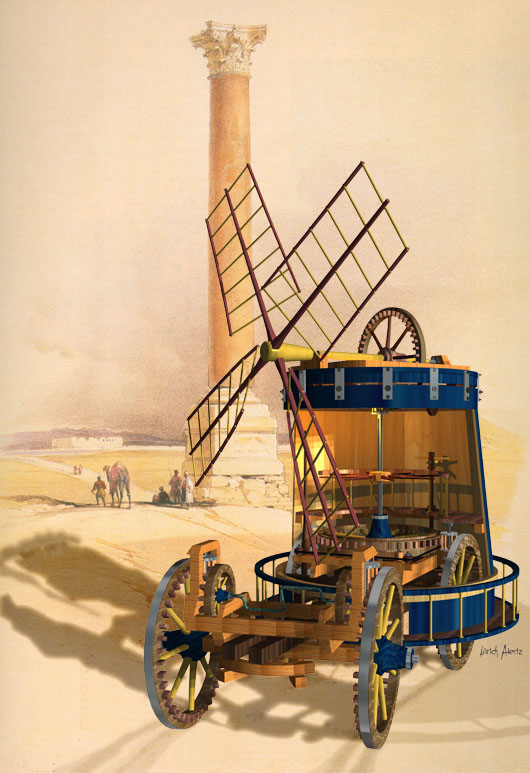
“Chapter XII. On the way of making a second waggon which is propelled by the wind without draught animals, and which dashes violently over open country to the confusion of all troops”