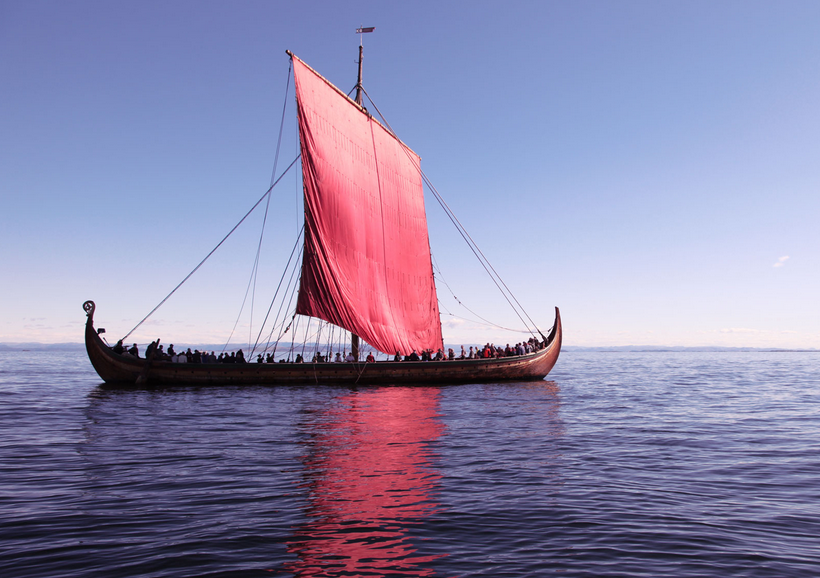
 “Draken Harald Hårfagre (that’s “Dragon Harald Fairhair” in English) is a modern interpretation (rather than an accurate replica) of an old Viking longship that was built in Haugesund, Norway, and launched in 2012.
In May next year she will set out on a voyage from Norway to Newfoundland via Iceland and Greenland, and the project organizers have just announced they are accepting applications for volunteer crew.
You need at least two months of free time to do it and presumably should have some sort of useful skill to boost your chances of being selected.
Conditions aboard look to be very Spartan by modern standards, with no shelter except for a tent on deck, but by traditional Viking standards it should be a veritable luxury cruise.”
Read more: Calling all Vikings. More sailboat news.