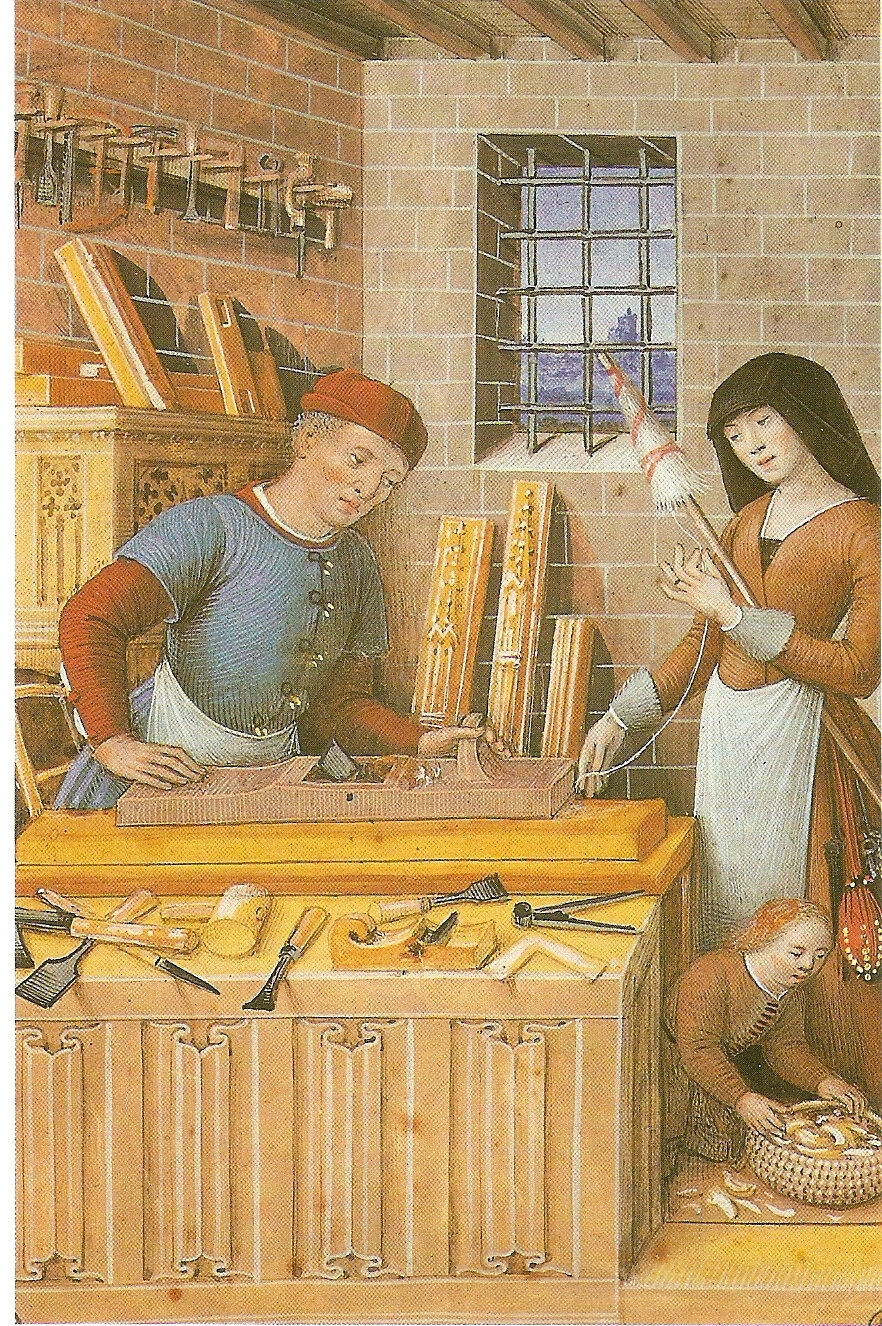
 “Fourastié [A French economist] is right in putting the case numerically to dramatize the shortening of the work week and the enormous transformation in living standards and in the qualitative nature of life. The case is indeed simple if 1950 is compared with 1815. But it is no longer quite so simple if 1950 is compared with 1250. It is important to consider, for labor, not only time but intensity.”
“It is possible to make a meaningful comparison between the fifteen-hour workday of a miner in 1830 and the seven-hour workday of 1950. But there is no common denominator between the seven-hour day of 1950 and the fifteen-hour day of the medieval artisan. We know that the peasant interrupts his workday with innumerable pauses. He chooses his own tempo and rhythm. He converses and cracks jokes with every passer-by.”
“We cannot say with assurance that there has been progress from 1250 to 1950. In so doing, we would be comparing things which are not comparable. Therefore, it is advisable to limit ourselves to saying that there has been progress since the beginning of the industrial era, which was founded on the breakup and destruction of the non-comparable and vanished old order.”
Quoted from “The Technological Society