Archives for April 2016

Electrically Powered Bicycle Trailer & Hand Cart (DIY)

electric powered bike trailer

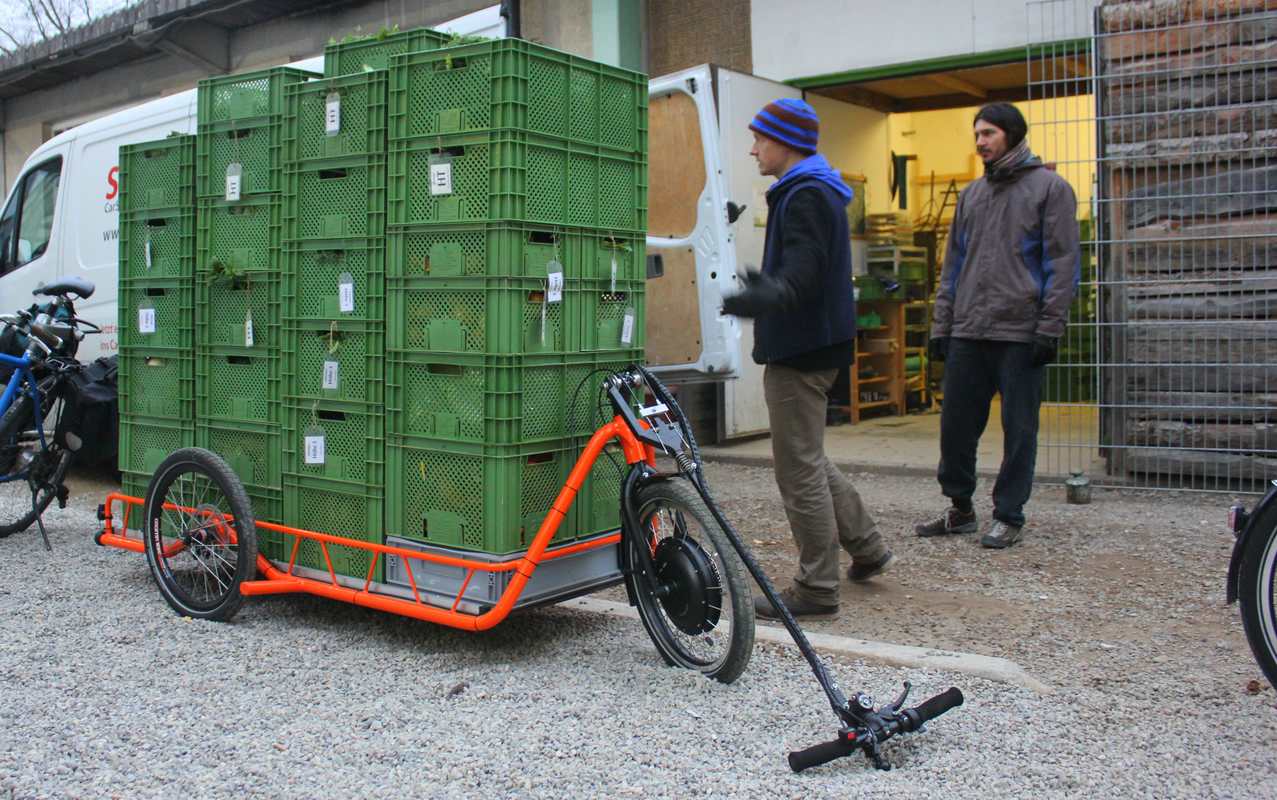
The German-made Carla Cargo is a three-wheeled cycle trailer with an electric assist motor. It can be pulled by any type of bicycle (including a cargo cycle or an electric bike), and it allows you to carry heavy (up to 150 kg) and bulky cargo (a loading platform of 60 x 160 cm). Uncoupled from the bicycle, the Carla Cargo works as a hand cart for large or heavy loads. The vehicle weighs 40 kg including the battery, and has a range of 40 to 60 km.
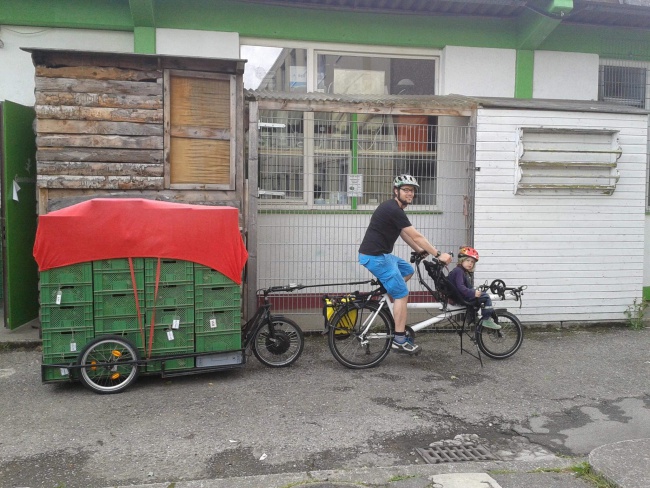
carla cargo bike trailerThe electric motor is built into the front wheel and can produce 250 watts as a trailer (up to 23 km/h), and 500 watts as a handtruck (up to 6 km/h). The lithium-ion battery has a capacity of 11 or 15 Ah. The vehicle has two disk brakes and a parking brake, which are controlled via the handle or the bicycle handlebar.

The Carlo Cargo sells for about 4,000 euro. The construction manual is freely accessible online, but only in German for now. The trailer/handcart is present at the International Cargo Bike Festival, April 16-17, in Nijmegem, the Netherlands.

Previously: 8-wheeler cargo cycle.
Capturing Indigenous Knowledge

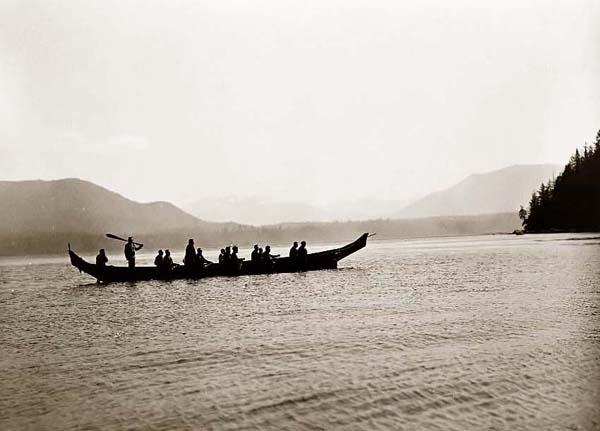
Kwakiutl-Boat

A Kwakwaka’wakw canoe in 1910. Picture by Edward S. Curtis.

Engineering4Change highlights a video series about indigenous knowledge. From their article:

Thirteen video interviews in a YouTube playlist and a research paper expound the value of indigenous knowledge, the knowledge gleaned from the world throughout millennia that is not formally enshrined in academia. Ignoring indigenous knowledge can cripple engineering projects, and learning from it can enhance them, says Khanjan Mehta, Director of Penn State’s Humanitarian Engineering and Social Entrepreneurship Program.

Carolyn Sachs tells a story of women tending maize fields in Swaziland who ignored the advice from visiting agricultural scientists. The consultants said the farmers should weed their fields, but what looked like weeds to the visitors were actually dietary staples and a source of Vitamin A that the visitors did not recognize.

Bruce Martin explains how Ojibwe fishermen in northern Minnesota read the water to predict the location of the catch and the day’s weather forecast, sometimes better than fish-finding sonar and the local weather channel.

In another video, Audrey Maretzki tells the story of a woman in a nutri-business cooperative in Kenya who described the nutritional values of two grains. Boys raised on maize are fat and boys raised on finger millet are wiry and will beat the maize-fed boys in a fight, the woman said.

“That hit me like an ‘aha’ moment, because I knew that wimby [finger millet] was a more nutritious grain than corn. And to have her tell that in her own way was a recognition on my part that in fact there was a lot of knowledge there that we needed to figure out ways to capture,” Maretzki says in her interview.