Archives for October 2019

To Decarbonize We Must Decomputerize: Why We Need a Luddite Revolution

Confronting the climate crisis will require something more radical than just making data greener. That’s why we should put another tactic on the table: making less data. We should reject the assumption that our built environment must become one big computer. We should erect barriers against the spread of “smartness” into all of the spaces of our lives. To decarbonize, we need to decomputerize.

Decomputerization doesn’t mean no computers. It means that not all spheres of life should be rendered into data and computed upon. Ubiquitous “smartness” largely serves to enrich and empower the few at the expense of the many, while inflicting ecological harm that will threaten the survival and flourishing of billions of people.

The zero-carbon commonwealth of the future must empower people to decide not just how technologies are built and implemented, but whether they’re built and implemented.

Read more: To Decarbonize, We Need to Decomputerize: Why We Need a Luddite Revolution. Via Roel Roscam Abbing.

Food Security in the West

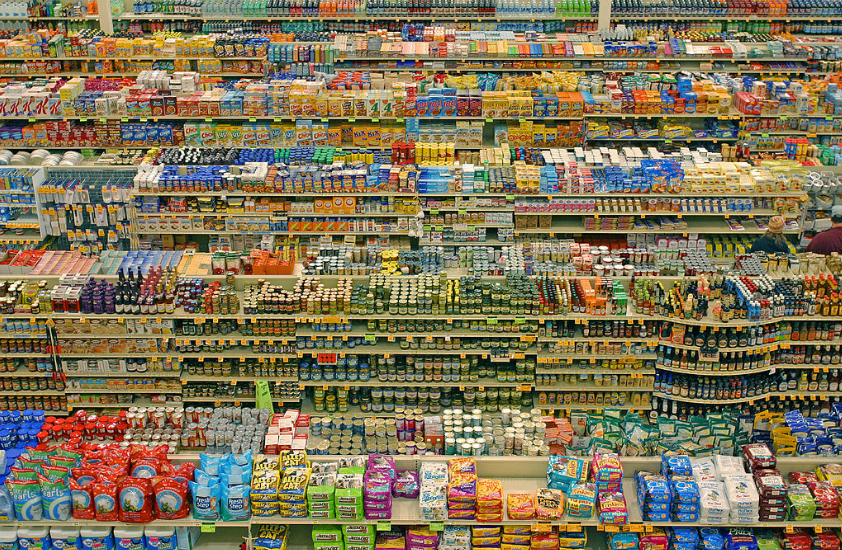
“It might seem alarmist, even tasteless, to mention food security in the West when we appear to be enjoying the greatest era of abundance in history. Food security is something we tend to associate with the developing world, and considering how many people worldwide face starvation every day, worrying about our own food supply seems almost obscene… On the face of it, the modern food industry seems to have solved the problem of food supply. Far from waiting anxiously at the quayside to see whether our ship will come in, there is now so much food swilling about in Western cities that most of us are more likely to die of obesity than hunger.”

“What could possibly go wrong? The short answer is: just about everything… Supermarkets supply us with 80 per cent of our food in Britain… Contrary to appearances, we live as much on a knife-edge now as did the inhabitants of ancient Rome or Ancien Régime Paris. Cities in the past did their best to keep stocks of grain in reserve in case of sudden attack; yet the efficiencies of modern food distribution mean that we keep very little in reserve. Much of the food you and I will be eating next week hasn’t even arrived in the country yet. Our food is delivered ‘just in time’ from all over the world: hardly the sort of system to withstand a sudden crisis.”

Quoted from: Hungry City: How Food Shapes our Lives. Carolyn Steel, 2013. Image: Packaged food aisles in an Oregonian hypermarket. Lyzadanger/Dilliff (CC BY-SA 2.0).