Archives for April 2020

Quarantine is the future big tech wanted us to want

In some ways, a pandemic is the ideal proof-of-concept for the particular utopia that the tech industry has tried to build. Social distancing plays to digital technology’s immediately tangible strengths: ubiquitous and sanitary access to other people, maximum convenience, broad consumer choice, and endless entertainment at low cost. As the coronavirus brought countless global systems to a halt, the internet kept working, heroically filling the gaps. Some longtime critics of the tech industry, having spent much of the past decade complaining about its toxicity, seemed ready to acknowledge a silver lining if not praise it outright.

But rather than prove that nearly anything is possible with an internet connection, the quarantine is calling attention to what digital technology can’t do. It was easier to think of the domestic cozy, online-first existence as not only possible but preferable when it was strictly a lifestyle choice. Being forced to live it, many of us are now discovering how much of the physical world we have taken for granted. Without distinct places for doing different activities like work and exercise, and bombarded by an accelerated news cycle, we’re losing our sense of time as well as space. Spatial variation helps structure the rhythms of everyday life and without the structure imposed by commuting, gathering with friends, and doing errands outside the house, days blur together and scheduling begins to feel arbitrary.

Read more: Home Screens, Drew Austin, Real Life Mag, April 27, 2020.
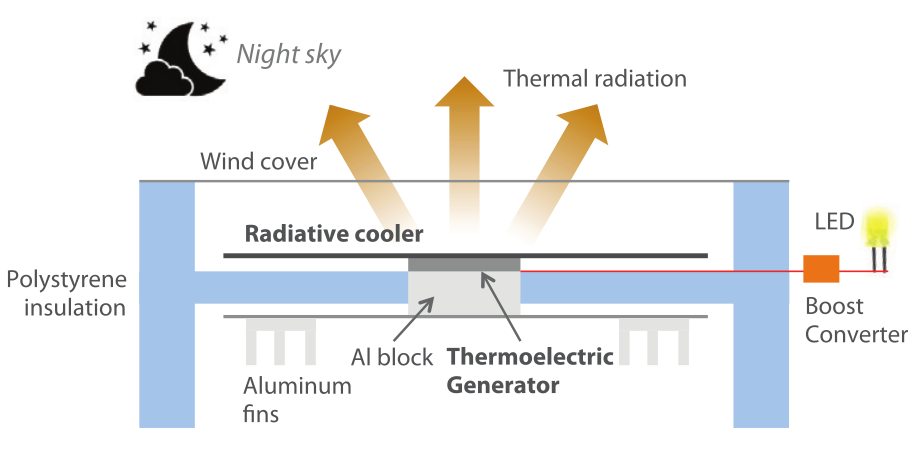
Generating Light from Darkness

Night-time power generation analogous to photovoltaics would be an enabling capability for applications such as lighting and wireless sensors. We demonstrate a low-cost power generation device based on thermoelectric generators where the cold side radiates heat to the cold of space by facing the night sky. The power generated is sufficient to maintain a LED at night, enabling battery-free off-grid lighting. [Read more…]

Self-Sufficiency Defies Common Sense

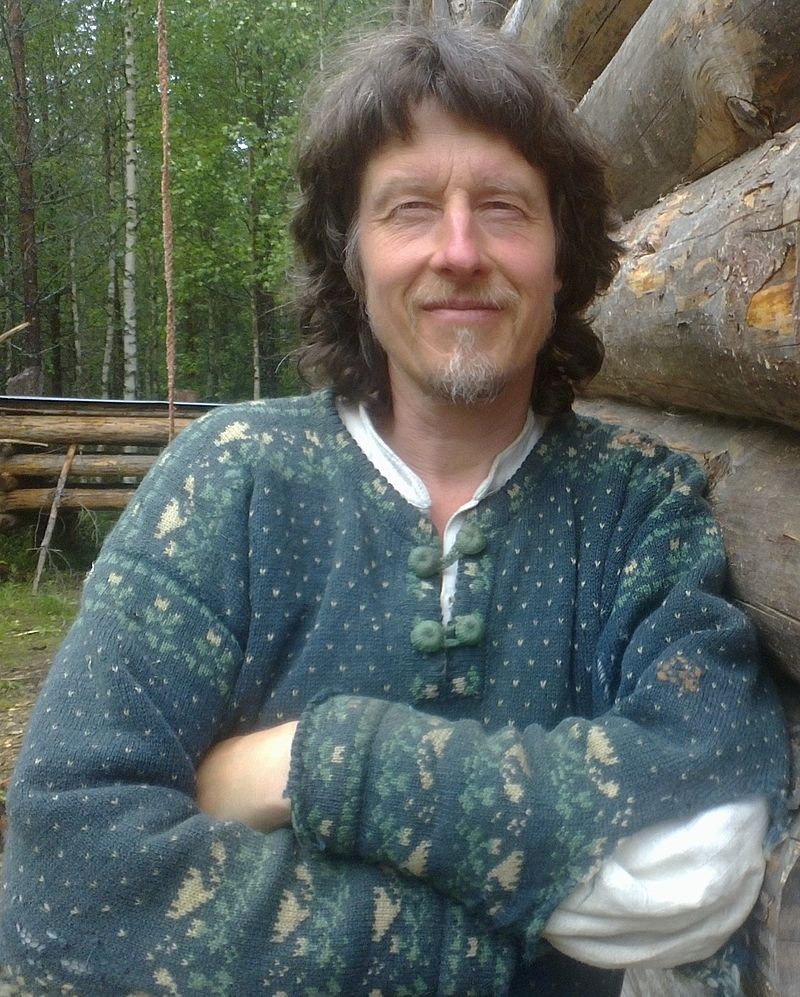
Many dream of financial self-sufficiency, but only few are prepared to go as far as Lasse Nordlund. In the early 1990s, Nordlund began an experiment living as self-sufficiently as possible. Eventually, he was able to sustain himself and his family with a budget of mere 30 to 50 euros per year, living in a small town in North Karelia, located in Eastern Finland, growing and preparing everything else from scratch, all by himself.

Nordlund is exceptional due to the depth of his experiment. What is also exceptional are the swarm of comments on the 2008 Helsingin Sanomat article covering the self-sufficient practices of Nordlund and his family. In little over a week, the article gathered 451 comments. A civic debate on radical self-sufficiency larger than this is hard to come by. Nordlund saved these comments for later research. Our study based on this material was published in the Kulttuurintutkimus journal in 2017.

Image: Lasse Nordlund, by Marko Ulvila (CC BY-SA 4.0)

[Read more…]