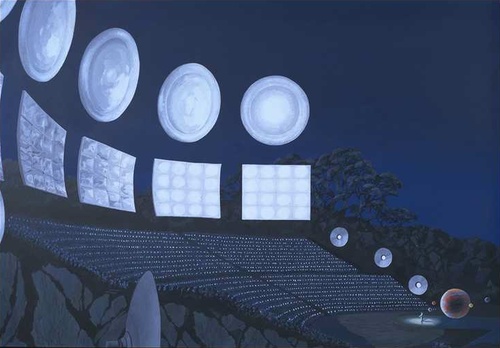
Under good climatic conditions and using specific technology, the full moon can be a powerful source of light. Using technology inspired by solar energy concentrators, the "Full Moon Theatre" lights its performances using only moonlight. Moonbeams are collected, concentrated, and focused on stage. The original Full Moon Theatre was built in Southern France and their plan is to create twelve Full Moon Theatres worldwide.
Korean artist Jihyun Ryou, a graduate of the Dutch Design Academy Eindhoven, translates traditional knowledge on food storage into contemporary design. She found the inspiration for her wall-mounted storage units while listening to the advice of her grandmother, a former apple grower, and other elderly. Her mission: storing food outside the refrigerator.
"IN SITU is a documentary directed by Antoine Viviani about the experiences of artistic activity in the city of Europe. At a time when the city seems to be increasingly saturated by noise and information, the film features artistic experiences alternately invisible, monumental, participatory or secret, which provoque our daily glance, and surprise us. IN SITU confronts the visions of these artists from different backgrounds with the input of ordinary people, philosophers, urban planners, architects but also viewers of the film, so as to try to identify what these InSitu experiments tell on our period, our urbanity."
"This wooden chronograph works according to the principle of a kitchen timer. An interval from 0 to 60 minutes can be set on the yellow clock face. When the time elapsed a tinkling signal sets off at the Bottle on the upper right side of the timer. The forefinger of the blue hand under which the yellow clock face is gliding, indicates the time set, resp. the time left. At zero the finger falls into the notch at the circumference of the clock face. Hereby the whole arm is lowered and the blockage of the ringing mechanism is lifted."
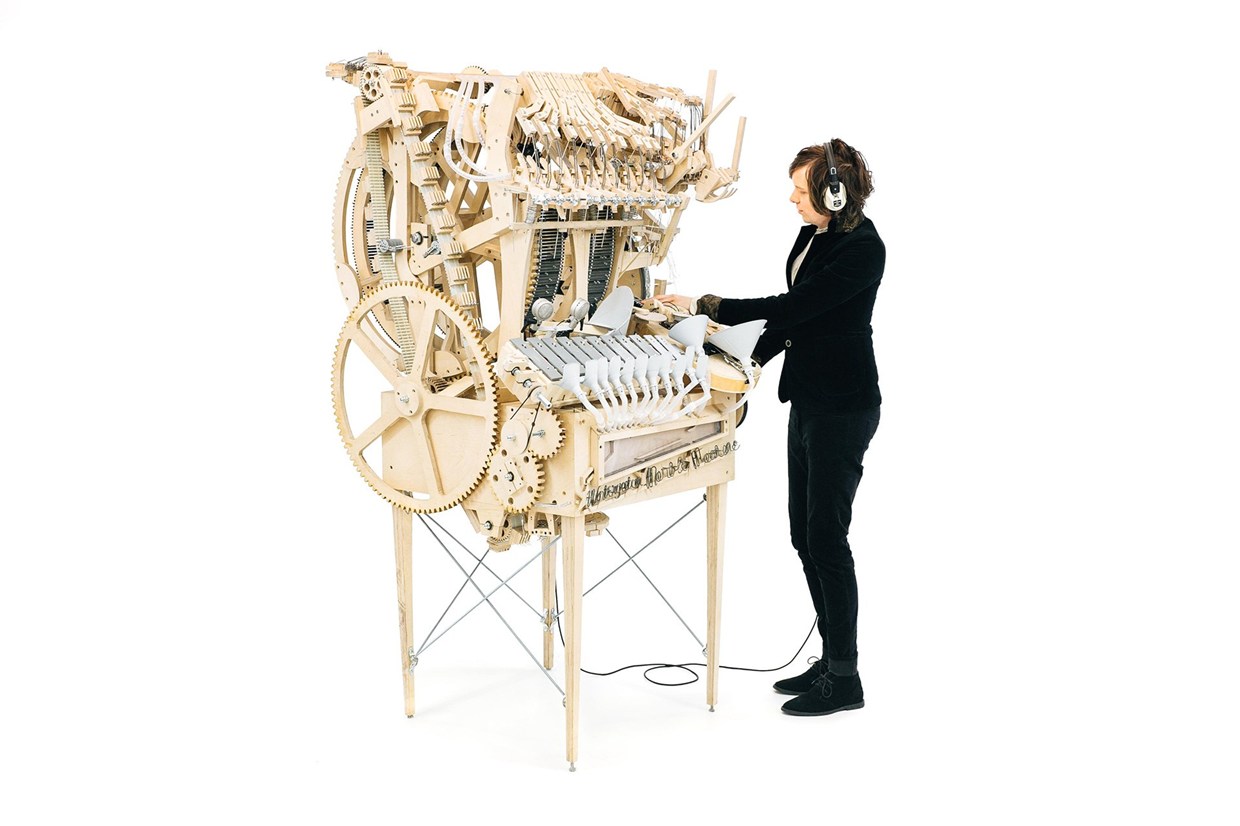
"The California artist Chris Burden may be in his 60s, but he is still playing with toys. The thing is, the older he gets the more outrageously complicated the toys become. 'Metropolis II' includes 1,200 custom-designed cars and 18 lanes."
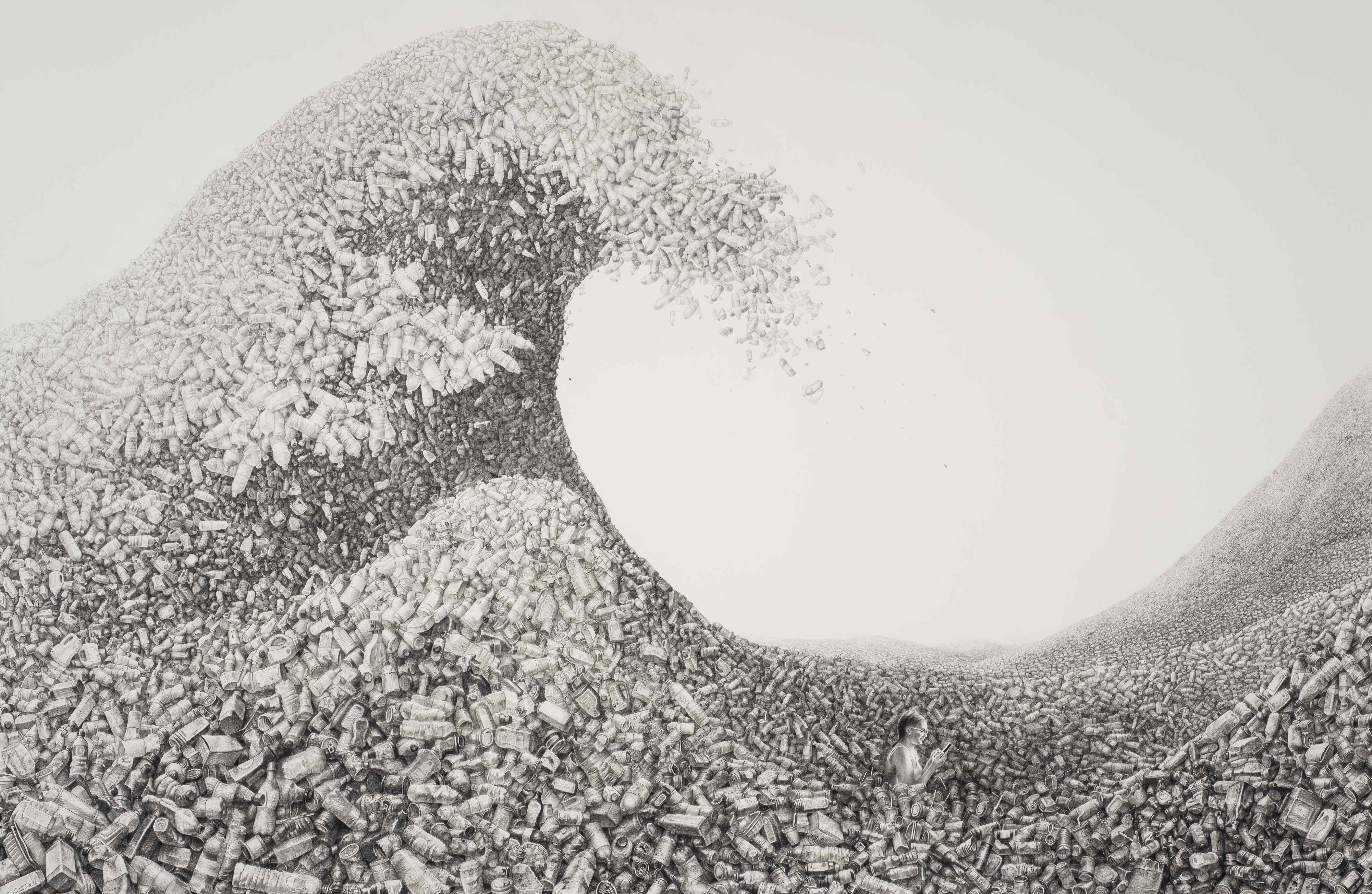
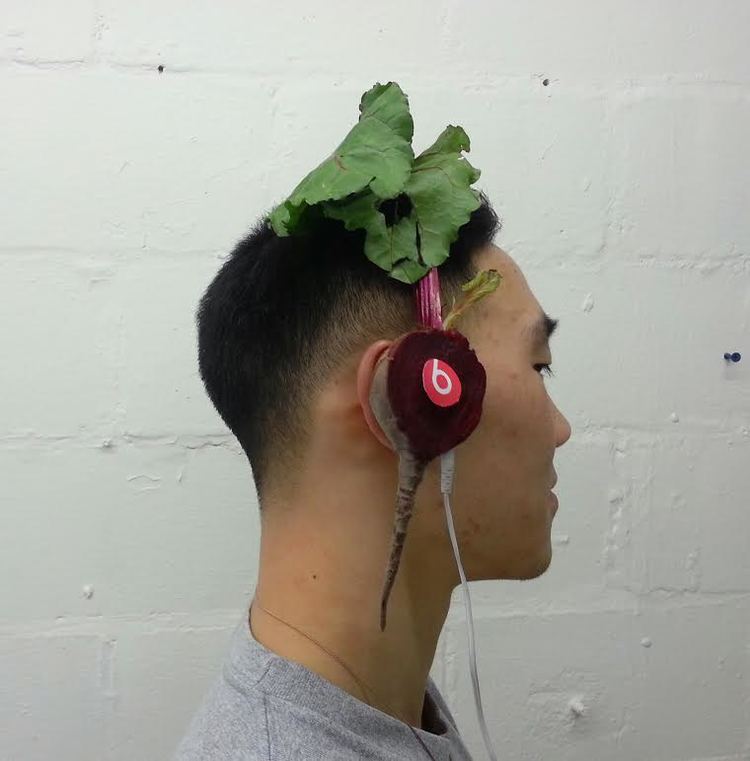
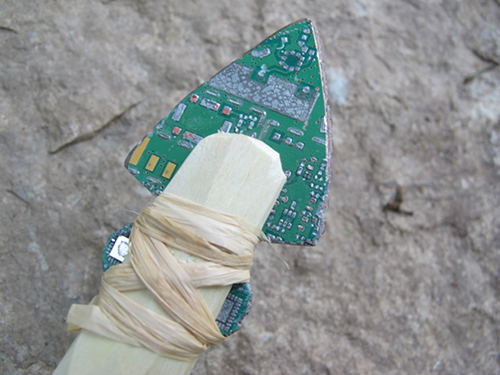
These days, artists have no difficulty in finding free materials to work with. The same stuff can be used over and over again, for different purposes. One artwork can be transformed into another. Why can't our industrial production system work the same way? Because it is automated and needs standardized parts. Mass production and re-use of scavenged materials don't match, unless the materials undergo the (mostly energy-intensive) intermediate step of recycling.
Above: Hubcap creatures by Ptolemy Elrington (also seehislamps - why do we need new materials to make lamps? There is enough trash in the world to make lamps for another 10,000 years).