Archives for February 2014

Buses instead of Trains

california rail newsThe latest issue (PDF, page 4/5) of California Rail News talks about our article on high-speed trains, and adds some interesting information:

The French National Railway (SNCF) has started a fleet of buses to replace international express trains. iDBUS, a brand allied with its low-cost iDTGV now occupies the Paris-Amsterdam, Paris-Brussels, Paris-London, Lyon-Milano and Lyon-Barcelona routes, offering 9 to 45 euro trips to those who have been priced off Thalys, Eurostar and trains now selling for up to 180 euro.

About 25 percent of the traffic is former overnight train trips, and the rest daytime runs with fares only a few euros cheaper than trains. Concurrently, the international expresses that used to serve Prague from Zurich, München, Frankfurt and Stuttgart also vanished, replaced by Nürnberg-Prague buses in Deutsche Bahn colors labeled IC Bus.

California Rail News editor Richard Tolmach also sent us a news article that does not bode well for the future of high speed rail travel in France:

France’s economic conditions mean passengers aren’t willing to pay up the money for the most expensive high speed rail routes.

Recording a net loss of 180 million euros in 2013 and effectively reversing the 376 million euro profit of the previous year is down to the 1.4 billion euro writedown of the high speed long distance train network value.

SNCF said that TGV “is not sufficiently profitable to cover the carrying amount of its fleet and its renewal.”

– See more at: http://www.totalrail.org/2014/02/17/frances-high-speed-rail-network-loses-2-billion-value/#sthash.IjguUGdE.dpuf

France’s economic conditions mean passengers aren’t willing to pay up the money for the most expensive high speed rail routes. Recording a net loss of 180 million euros in 2013 and effectively reversing the 376 million euro profit of the previous year is down to the 1.4 billion euro writedown of the high speed long distance train network value. SNCF said that TGV “is not sufficiently profitable to cover the carrying amount of its fleet and its renewal”.

Previously: High Speed Trains are Killing the European Railway Network.
Low-Tech Kite-Fishing in the Indo-Pacific

kite fishing 1908

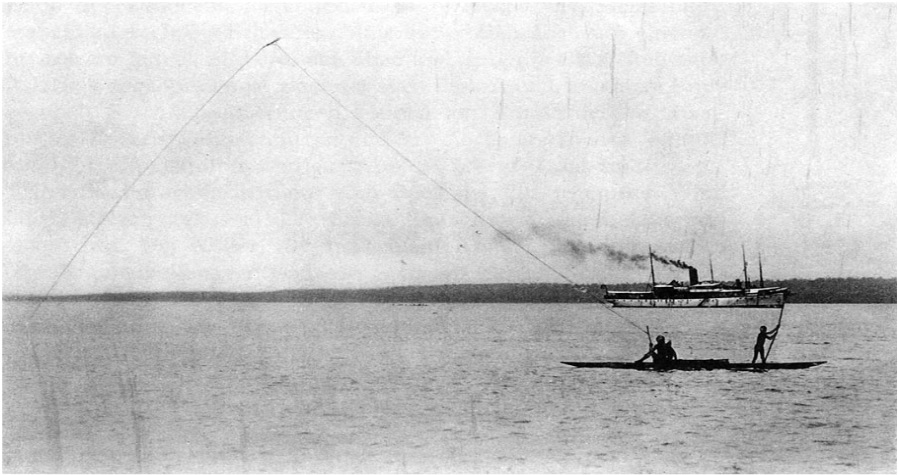
“We set out to sea but kept close to the canoe occupied by the two fishermen. Off the island the old fisherman gradually played out the kite. As it swung in the breeze we noticed that the webbing just had enough length so that it touched the surface of the sea with every soft fall of the canoe as it rose and dipped. Presently there was an agitation in the sea behind the canoe and we could see several fish coming to the surface. Apparently intrigued by the tantalizing touching of the surface by the webbing, the fish were jumping for it. Finally one caught the webbing in his mounth and with a shout, the old fisherman neatly hooked it in with a hand net.”

Picture: Kite-Fishing off Pitilu (Admiralty Islands) as photographed in 1908 by H. Vogel of the Hamburg Südsee Expedition.

[Read more…]

Frugal Digital: Repairing, Hacking, and Repurposing Electronics

Frugal Digital Repairing, Hacking, and Repurposing Electronics

Frugal Digital is a project that focuses on creating digital solutions in low resource settings like that of developing countries:

“Silicon technology is mostly about a culture of excess. It’s about the fastest, and the most efficient, and the most dazzling gadget you can have, while about two-thirds of the world can hardly reach the most basic of this technology to even address fundamental needs in life—including health, education, and all these kinds of very fundamental issues.”

“We work on projects to set the framework, create tools and provide inspiration for frugal innovators around the globe. Frugality is a way of thinking that optimizes given resources, up-cycles and has the spirit of improvisation. We aim to apply frugality to digital life and create solutions that are inexpensive, adaptable, use available resources and create valuable knowledge along with new solutions.”

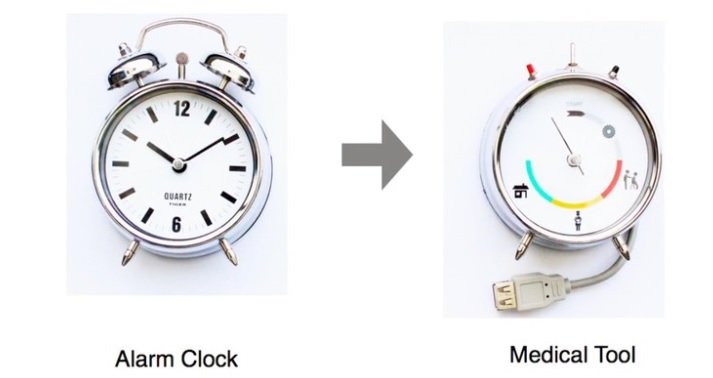
Working with local tinkerers, Frugal Digital already made some interesting machines, mixing parts from different objects. A low-cost cell phone became the heart of a multi-media projector for education, while an alarm clock was rebuilt as an easy diagnostic tool to improve healthcare. Their community radio station introduces “air tweets”.

Via iFixit, who brings more good news for digital tinkerers: there is absolutely no shortage of disposed electronics.